
Deidre Pfeifer

Real Estate Agent, California

  • Home
  • About Deidre
  • Blog
  • Resources
    • First Time Home Buyer Tips
    • First Time Home Seller Tips
  • View Listings
  • Reviews
    • Deidre on Zillow
    • Leave a Review
  • Contact Deidre

Kitchen Space Saving Designs To Maximize What You’ve Got

March 13, 2014 by Deidre Pfeifer

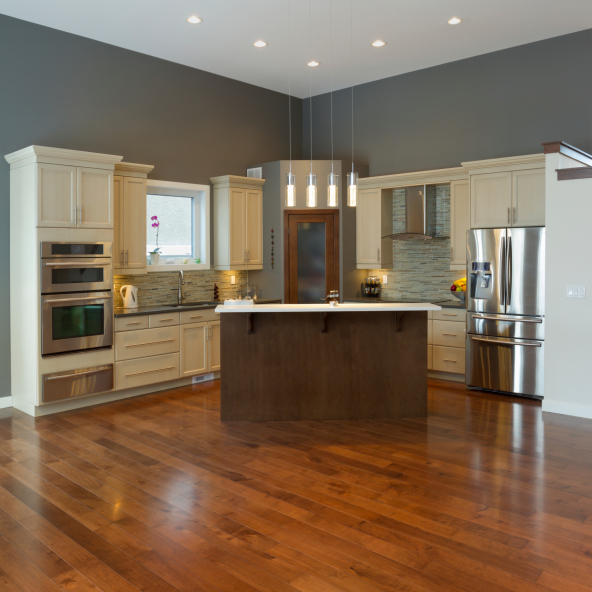
Kitchen on the Small Side? 4 Space Saving Designs to Maximize What You’ve GoSo you’ve found the perfect home, but there’s just one problem: the kitchen isn’t as big as you’d like it to be. At first glance, a smaller kitchen might seem like a deal-breaker, especially if you love to cook.

With a few space-saving design tricks, though, you’ll have all the space you need and then some. It’s all about making the most of what you’ve got. Here’s how you can turn even the smallest kitchen into an efficient cooking and dining space.

Fill Up The Walls: There’s Ample Storage All Around You

Walls are a surprisingly underused surface area in most kitchens. From spice racks to towel racks to magnetic knife boards, walls can offer a wealth of space options. Ditch the bowl fruit painting and throw up some hooks and shelves.

Not only will everything you need be within reach, you’ll open up more space in your cabinets and on your counters. For the gadget obsessed, rack storage will give you the chance to show off your nifty kitchen gadgets.

Repurpose Your Corners with Shelving And Other Amenities

In a small kitchen, sufficient counter space can be hard to come by. While knife blocks and spices racks tend to encroach on what little space is available, not all space saving designs are about reclaiming lost space. Sometimes it’s about repurposing forgotten spaces like corners.

Most homeowners dismiss the corners of their kitchens, thinking the space is too awkwardly shaped to be of any real use. Take advantage of corners by installing clever storage like a lazy Susan system for under the countertop, built-in shelving for above the counter, or for a really creative update, dedicate the corner to an invaluable feature like the kitchen sink.

Hang Your Pots and Pans

Pots are bulky and often difficult to store without taking up several cabinets. A circular pot rack mounted to the ceiling allows you to take advantage of the height of your kitchen in the open space right above your head. In fact, pot racks can be used to store all kinds of cookware and cooking utensils that are too cumbersome to store in drawers, like ladles and colanders.

Placing a rack in the empty space above an island or by the stove can provide excellent storage space and easy accessibility. Ceiling and wall-mounted pot racks often have hooks to hang your cookware from, so make sure you mount yours in a place that doesn’t force visitors to navigate an aerial obstacle course just to make it to the sink.

Invest In A Rolling Tea Trolley

Kitchens with very limited counter space can gain an extra work area as well as storage space with a tea trolley. A mobile work surface means to you can roll it anywhere in your kitchen to do your dicing and slicing, and then store it away when you’re done. Add multiple shelves to the trolley to create even more storage.

There’s no need to be discouraged by a cozy kitchen. Not only can these space saving tricks help you gain extra space, they can also give you the chance to explore new ways to express your personal style.

For more advice on homeownership and making the most of your home’s various features, or to find your next home, contact a real estate professional today!
Filed Under: Uncategorized Tagged With: Home Design, Kitchens, Real Estate

Kitchen Space Saving Designs To Maximize What You’ve Got

March 13, 2014 by Deidre Pfeifer

Kitchen on the Small Side? 4 Space Saving Designs to Maximize What You’ve GoSo you’ve found the perfect home, but there’s just one problem: the kitchen isn’t as big as you’d like it to be. At first glance, a smaller kitchen might seem like a deal-breaker, especially if you love to cook.

With a few space-saving design tricks, though, you’ll have all the space you need and then some. It’s all about making the most of what you’ve got. Here’s how you can turn even the smallest kitchen into an efficient cooking and dining space.

Fill Up The Walls: There’s Ample Storage All Around You

Walls are a surprisingly underused surface area in most kitchens. From spice racks to towel racks to magnetic knife boards, walls can offer a wealth of space options. Ditch the bowl fruit painting and throw up some hooks and shelves.

Not only will everything you need be within reach, you’ll open up more space in your cabinets and on your counters. For the gadget obsessed, rack storage will give you the chance to show off your nifty kitchen gadgets.

Repurpose Your Corners with Shelving And Other Amenities

In a small kitchen, sufficient counter space can be hard to come by. While knife blocks and spices racks tend to encroach on what little space is available, not all space saving designs are about reclaiming lost space. Sometimes it’s about repurposing forgotten spaces like corners.

Most homeowners dismiss the corners of their kitchens, thinking the space is too awkwardly shaped to be of any real use. Take advantage of corners by installing clever storage like a lazy Susan system for under the countertop, built-in shelving for above the counter, or for a really creative update, dedicate the corner to an invaluable feature like the kitchen sink.

Hang Your Pots and Pans

Pots are bulky and often difficult to store without taking up several cabinets. A circular pot rack mounted to the ceiling allows you to take advantage of the height of your kitchen in the open space right above your head. In fact, pot racks can be used to store all kinds of cookware and cooking utensils that are too cumbersome to store in drawers, like ladles and colanders.

Placing a rack in the empty space above an island or by the stove can provide excellent storage space and easy accessibility. Ceiling and wall-mounted pot racks often have hooks to hang your cookware from, so make sure you mount yours in a place that doesn’t force visitors to navigate an aerial obstacle course just to make it to the sink.

Invest In A Rolling Tea Trolley

Kitchens with very limited counter space can gain an extra work area as well as storage space with a tea trolley. A mobile work surface means to you can roll it anywhere in your kitchen to do your dicing and slicing, and then store it away when you’re done. Add multiple shelves to the trolley to create even more storage.

There’s no need to be discouraged by a cozy kitchen. Not only can these space saving tricks help you gain extra space, they can also give you the chance to explore new ways to express your personal style.

For more advice on homeownership and making the most of your home’s various features, or to find your next home, contact a real estate professional today!

Filed Under: Uncategorized Tagged With: Home Design, Kitchens, Real Estate

Where To Find Inspiration For Your Home Decor

March 12, 2014 by Deidre Pfeifer

Where To Find Inspiration For Your Home DecorAre you working on decorating your home? Perhaps you want to spruce up your decor, but you aren’t sure where to start. Where can you find inspiration for your home decor, besides the obvious home decor magazines and websites?

Here are some fun and creative ideas that will inspire you when designing your decor:

Luxury Hotels

The next time you go on a vacation, you can find decor inspiration at your hotel. Most hotel rooms in mid-range to luxury hotels have beautiful, comforting and understated designs, so take photos if you find something that you like.

Perhaps you can invest in plush throw pillows for your bed, a sleek bed table lamp or thick white towels for your bathroom to recreate the look of a luxury hotel.

Art Galleries

Take a walk around your local art gallery and see if you can find some inspiration there. Perhaps the harmonious colors of Impressionist paintings or the angular shapes of Cubism will inspire you to add visual interest to your decor.

You might not be able to afford an original Picasso or Monet, but you can always order prints of your favourite artists online and add art to your home on a budget.

The Beauty Of Nature

Another place to find beauty and inspiration is from Mother Nature herself. Take a walk outside in the country and take some photos of what you encounter.

Perhaps you will be inspired to paint your walls a shade of green just like the spring leaves, or create a centrepiece for your table made from pinecones.

Fashion Design

You can also find inspiration from the colors, textures and patterns that are popular in the world of fashion design. Look at magazines, fashion shows and advertisements to see what colors and styles are popular at the moment.

If you love the look of a certain item of clothing, think about how you can incorporate that color, texture or pattern into your decor.

If you have an open mind, you can find inspiration for your home decor all around you. These are just a few ideas to get you started, but of course there are many other sources of inspiration out there.

For more info and tips regarding your home, contact your trusted real estate profesional.

Filed Under: Uncategorized Tagged With: Around The Home, Home Decor, Home Improvement

Furry Friend Blues, The Best Ways To Settle Your Pet Into Your New Home

March 11, 2014 by Deidre Pfeifer

Furry Friend Blues, The Best Ways To Settle Your Pet Into Your New HomeMoving can be a stressful and exciting process, and when moving with pets, your furry friend most certainly feels the stress and excitement as well.

Pets don’t always respond well to a new environment, so it’s important to do whatever you can to ease your pet into your new house.

Settling yourself and your pet into your new home may take time, but you can make it a smoother process by doing some research and planning. Here’s how you can create a stress-free transition for your beloved pooch or kitty.

Where To Put The Pet During The Move

During the actual move itself, it is best for your dog or cat if you can get them away from the action altogether. Ideally, it’s best if a neighbor or family member that your pet is familiar with can take the pet for the day.

For long haul moves, some pet owners opt to take their dog or cat to a kennel for a few days to help them avoid the stress of the moving atmosphere.

A slow and steady packing of boxes will also indicate a change to your pet, and if done over a longer period of time, can help them prepare for the upcoming change of scenery.

The Interior Introduction: Getting Your Pet Settled

Before the actual move of all the boxes, it might be a good idea to take your pet’s belongings to the new house first. Having some of their familiar items, such as toys, a kennel, and blankets, can help to ease the process of settling into the new home.

You may also want to dedicate a room or part of the house as your pet’s sanctuary, where they can feel safe and secure while boxes and pieces of furniture are being moved into the new home. Ensure that you don’t switch your pet’s food too much around the time of the move, as this can exacerbate the effects of the change.

Some pet owners have found it effective to wait until the new house is unpacked and settled before introducing their pets to the home. This way, the pet can becoming acquainted with the new atmosphere without the chaos of movers, piled up boxes, and a stressed-out, scrambled owner! If using this method, you can keep your pet at the kennel of family member’s house until you are settled in.

The Surroundings: Exploring The New Neighborhood

If you have a dog, it is just as important to get him acquainted with the new neighborhood as it is to get him acquainted with the home itself. This is something you can also do well before the move; when preparing for a move, drive your dog over to your new neighborhood and let him explore where his new home will be.

This way, when you arrive to introduce your dog to the home itself, he will already be familiar with the area, thereby reducing the stress of the new atmosphere in the house.

Moving is no easy feat, and it’s even more complicated when pets are involved. By following some of these simple steps and planning ahead, you can achieve a move that involves much less stress.

Avoid the furry friend blues and introduce your pet to its new home in a gentle way. For more great moving tips, or to find the home that’s right for you, contact a professional realtor today.

Filed Under: Uncategorized Tagged With: Around The Home, Homeowner Tips, Pets In Your New Home

What’s Ahead For Mortgage Rates This Week – March 10, 2014

March 10, 2014 by Deidre Pfeifer

Whats Ahead For Mortgage Rates March 10 2014Last week’s economic news included construction spending and the CoreLogic Home Price Index for January.  Reports for February included ADP Employment, Non-Farm Payrolls and national unemployment data.

The Federal Reserve’s Beige Book report and weekly reports on mortgage rates and new unemployment claims rounded out the week’s economic news.

Highlights for last week include:

Consumer spending gained 0.40 percent for January. The expected reading was 0.20 percent and the reading for December was flat.

The Commerce Department reported that increased spending was less an indicator of consumer discretionary spending than an indicator of high utility costs caused by severe winter weather.

Construction spending ticked upward in January with gain of 0.10 percent as compared to expectations of -0.40 percent and the prior month’s reading of 0.10 percent.

January’s reading translates to a seasonally adjusted annual figure of $943.1 billion.  

Federal Reserve: Winter Weather Obscures Accurate Economic Outlook

According to the Fed’s Beige Book report, much of the U.S. economy was impacted by severe winter weather. The report is based on anecdotal information provided by business contacts and industry leaders throughout the 12 regions of the U.S. Federal Reserve System.

Eight regions reported slow economic growth. Janet Yellen, chairwoman of the Fed, noted that winter weather was not expected to alter the Fed’s plan to continue reducing its asset purchases under its quantitative easing program. She also said that it may be months before accurate economic readings can be obtained in the aftermath of winter weather conditions.

Freddie Mac’s Primary Mortgage Market Survey brought good news on Thursday as mortgage rates fell across the board and discount points were also lower in most cases.

Average mortgage rates were down nine basis points for a 30-year fixed rate mortgage at 4.28 percent. The average rate for a 15-year fixed rate mortgage was 3.32 percent, a decrease of seven basis points.

The rate for a 5/1 adjustable rate mortgage was 3.03 percent, down by two basis points from the prior week. Discount points were unchanged for 30-year fixed rate mortgages at 0.70 percent, but dropped to 0.50 percent for 15-year fixed rate mortgages and 0.40 percent for 5/1 adjustable rate mortgages.

Employment Sector: Surprise Results

The ADP payroll report showed a reading of 139,000 jobs added in February as compared to the prior month’s 127,000 jobs. ADP tracks private sector jobs. The BLS released its Non-Farm Payrolls report for February, which also surpassed expectations.

175,000 jobs were added against expectations of 140,000 jobs added and January’s reading of 129,000 jobs added. The national unemployment rate rose to 6.70 percent against an expected drop to 6.50 percent from January’s reading of 6.60 percent. Once again, foul weather was seen as a major influence.

What‘s Ahead This Week

This week’s economic news schedule is relatively light with no releases set for today.

Mortgage rates will be released by Freddie Mac on Thursday, along with weekly jobless claims. Retail sales and the University of Michigan consumer sentiment index round out next week’s schedule. 

Filed Under: Uncategorized Tagged With: Employment Report, Home Price Index, Mortgage Rates

How To Add Color To Your Home Decor Without Going Overboard

March 7, 2014 by Deidre Pfeifer

How To Add Color To Your Home Décor Without Going OverboardThere is a fine line between adding color to your home decor and using too much color, so that you feel like you are living inside a rainbow.

A little bit of color will add a lot of fun and interest to your home design, but too much color can be overwhelming. How can you achieve that perfect balance?

Here Are Some Tips To Keep In Mind For Using Color In Your Home In A Subtle And Balanced Way:

  • Use Color Schemes

Before choosing the colors for your decor, do a little bit of research into color schemes and how they work, so you know how to combine colors harmoniously.

For example, you can choose a complementary color scheme with shades that are across each other on the color wheel – such as blue and orange or purple and yellow.

Or you could try an analogous color scheme, which is a scheme where the colors are next to each other on the colour wheel – such as blue, green and purple.

  • Use The 60/30/10 Rule

This is a rule that interior decorators use in order to use colors in a balanced way. Use the dominant color on 60% of the room, so that it will create a unifying look.

Then, use the secondary color on 30% of the room in order to add visual interest. Lastly, use an accent color for 10% of the room to add that little extra.

For example, you might use the dominant color for the walls and carpet, the secondary color for the upholstery and the accent color for some pillows, a wall hanging or a throw rug.

  • Try An Accent Wall

Perhaps you have found a gorgeous paint color, but it’s just a little too bright and overwhelming to use for all four walls of a room.

In this case, you can simply paint one wall with the color and the other walls with a neutral tone, so that you can enjoy the shade without it being overpowering.

You could also simply use the color in one aspect of the room, such as the baseboards or the door jams.

These are just a few of the ways that you can incorporate color into your home design, without it being overpowering. For more information, call your trusted real estate professional.

Filed Under: Uncategorized

Winter Blues, 9 Easy Ways To Brighten Your Home And Your Spirit

March 6, 2014 by Deidre Pfeifer

Winter Blues, 9 Easy Ways To Brighten Your Home And Your SpiritThese gray, dreary winter days can really sap your energy and dull your enjoyment of life. To survive the winter doldrums, brighten your home.

Use These Easy Tips:

  1. Open your home’s window treatments during the day to let the light brighten and warm your room. Close them again as soon as night falls to retain heat.
  2. Brighten dark rooms with few windows by placing spotlights on the floor behind furniture.
  3. Add a mirror. Wherever a mirror reflects light in a room, it visually doubles that light.  Place a mirror opposite a window to immediately brighten your space. No window?  Hang a large mirror above a console table and place a pair of lamps in front of the mirror.
  4. Install higher watt bulbs in rooms that tend to be dark.
  5. Eliminate dark corners by adding recessed lighting.
  6. Use full spectrum lighting in areas where you read, knit or do other up-close work.
  7. Lighten living areas with colorful throws and pillows.
  8. Lift the winter blues by adding flowers and plants to your decor. Colorful indoor blooming plants include the African violet, Cyclamen, Orchid and desert cactus.  Use tropical flowers to transport yourself mentally to climates where the sun always shines.
  9. Do A Little Winter Cleaning:
    1. Wash the inside of your windows. Fireplace and candle soot coats windows with a dingy film that blocks the sun.
    2. Polish your furniture. Shiny furniture reflects ambient light.
    3. Wash ceiling light fixtures in soapy water. Light is muted when filtered through dirty light fixtures.

Lighting can change how you (and potential buyers) feel about your home. It’s one of the easiest and least expensive ways to quickly improve the ambiance of your home.

If you’d like to sell your home, I can help. Contact your real estate professional today.

Filed Under: Uncategorized

Highest Year-Over-Year Increase In Home Prices Since 2005

March 5, 2014 by Deidre Pfeifer Leave a Comment

Highest Year-Over-Year Increase In Home Prices Since 2005Two major indicators of home price trends showed a slowing momentum for home prices in December. The S&P Case Shiller 10 and 20 city indices reported that of 20 cities tracked, home prices were lower in December than for November.

Case-Shiller’s seasonally adjusted month-to month reading showed that home prices rose by 0.8 percent as compared to 0.90 percent in November.

David Blitzer, chairman of the index committee at S&P Dow Jones Indices, said that “Gains are slowing from month-to-month and the strongest part of home price recovery may be over.” He also noted that seasonally adjusted data was showing a loss of momentum for home prices.

December home prices posted a year-over-year gain of 13.40 percent, down from November’s year-over-year reading of 13.70 percent. December’s reading reflected the highest year-over-year increase in home prices since 2005.

Analysts note that a slower pace of increasing home prices may allow more buyers to enter the market, and may also encourage more buyers to list their properties for sale.

This would increase inventories of available homes and relieve pent-up demand for homes. Although home price growth is cooling off, average home prices remain 20 percent below their pre-recession peak in 2006.

Home Prices Face Challenges In 2014

Another factor in slower growth of home prices is regional differences in the rate of economic recovery. Cities including Dallas, Texas and Denver, Colorado recently set records for escalating home prices.

Five states including Florida and Michigan accounted for almost half of foreclosures completed during 2013. Slow job growth and poor winter weather were also blamed for slower gains in home prices.

New mortgage rules and relatively strict mortgage lending standards may continue to dampen housing markets, but there is some good news as some lenders are easing credit standards.

 FHFA: Home Prices Higher For 10th Consecutive Quarter

The Federal Housing Finance Administration reported similar trends in December home price data for properties either financed or owned by Fannie Mae or Freddie Mac. Home prices rose by a seasonally adjusted rate of 0.80 percent in December as compared to November’s reading.

Home prices were 7.70 percent higher for the fourth quarter of 2013 than for the same period in 2012. Adjusted for inflation, this reading indicates an approximate year-over-year increase of 7 percent.

FHFA reported higher readings for 38 states in its fourth quarter 2013 Home Price Index, as compared with 48 states in in the third quarter of 2013.  In order of home price appreciation, the top five states with highest growth in home prices were Nevada, California, Arizona, Oregon and Florida.

These calculations were seasonally adjusted and based on home purchases only.

Filed Under: Housing Analysis Tagged With: Case Shiller,HPI,Housing Analysis

The Unexpected In Buying Real Estate

March 4, 2014 by Deidre Pfeifer Leave a Comment

The Unexpected In Buying Real EstateWhen buying real estate, you may find some unexpected problems. Generally, these issues revolve around plumbing, wiring or sticking doors and windows. Although they aren’t as expensive to fix as other issues, there’s always a possibility that they indicate bigger problems. 

Sticking Doors/Windows

Spotting wear and tear on doors and windows is fairly easy. Check the hinges and locks.  Squeaking hinges or locks that stick indicate wear on seals and metal. 

Although sticking doors and windows aren’t a big deal in and of themselves, these issues can be indications of moderate to severe foundation problems. If you find these issues in real estate, make your way to the basement and look for cracks or dips in the floors and walls. 

Pay attention to how the floors of the house feel when you walk. If you’re at all uneasy, have an inspector look at the house before you buy.

Plumbing Problems

Sometimes, plumbing problems aren’t so easy to find. Sellers have been known to use temporary fixes, which does a good job of hiding the issues. However, there are places to look that make the problems easier to find.

  • Look up in the corners where the walls connect to the ceiling. Spackled ceilings make issues especially easy to spot, as they pick up water stains or crack and flake. 
  • Another place to check is the bathroom, along the bottom of the wall. 
  • Tile grout has a tendency to crack or flake, become discolored or loosen with continuous proximity to water. 
  • Finally, check the closets. 

People who use temporary fixes will generally work hard to cover up the problems in lived-in rooms, while forgetting to fix walls and ceilings in closets.

Faulty Wiring

Spotting faulty or old wiring depends on the size of the issue and where it’s located. For instance, a bad socket can be found by looking for darkened spots around the holes. However, it’s impossible to look through the walls to find faulty or old wiring behind them. An electrician will be able to give you a better idea of the wiring in the real estate.

Remember, nothing takes the place of getting real estate you’re thinking of buying inspected by a professional. 

Are you considering purchasing a new home? Let me help you get your dream home at the lowest price. Call your trusted real estate professional.

Filed Under: Homebuyer Tips Tagged With: Homebuyer Tips,Home Selling Tips,Home Improvement

What’s Ahead For Mortgage Rates This Week – March 3, 2014

March 3, 2014 by Deidre Pfeifer Leave a Comment

2014-03-03-WhatsAheadThisWeekLast week’s economic news was mixed, with new home sales increasing and weekly jobless claims higher than expected.

Case-Shiller and FHFA home price reports reflected slower growth in home prices. Mortgage rates moved higher for the third consecutive week.

Weakness in the jobs sector and harsh winter weather were seen as factors contributing to economic events, but sales of new homes jumped unexpectedly to their highest since 2008.

Case-Shiller, FHFA Report Slower Growth for Home Prices

The Case-Shiller composite home price index for December reported that home prices declined by 0.10 percent in December, which was the second consecutive monthly decline.

On a seasonally adjusted basis, home prices rose 0.80 percent in December as compared to November’s reading of 0.90 percent. Year-over-year, home prices grew at a rate of 13.40 percent, their fastest pace since 2005.

The momentum of year-over-year home prices declined in December as compared to November’s year-over-year reading of 13.70 percent. 11 of 20 cities included in the Case-Shiller composite index declined.

Analysts said that low inventories of available homes, higher mortgage rates and severe winter weather contributed to slower growth in home prices.

FHFA’s quarterly House Price Index for the fourth quarter of 2013 posted its tenth consecutive gain in quarterly home prices. Seasonally adjusted home prices rose by 0.80 percent from November to December 2013.

FHFA, which oversees Fannie Mae and Freddie Mac, reported that home prices increased by 7.70 percent from the fourth quarter of 2012 to the same period in 2013. Adjusted for inflation, the agency reported a year-over-year increase of 7.0 percent.

FHFA House Price Index data is based on sales information for homes with mortgages held or securitized by Fannie Mae and Freddie Mac.

Fixed Mortgage Rates, New and Pending Home Sales Rise

Freddie Mac reported that average rates for fixed-rate mortgages rose last week, with the rate for a 30-year fixed rate mortgage rising 4 basis points to 4.37 percent.

The rate for a 15-year mortgage also increased by 4 basis points to 3.39 percent. The average rate for a 5/1 adjustable rate mortgage fell by 3 basis points to 3.05 percent. Discount points were unchanged at 0.7 0 percent for fixed rate mortgages and 0.50 percent for a 5/1 adjustable rate mortgage.

Weekly jobless claims also rose to 348,000 against projections for 335,000 new jobless claims. The four-week average for new jobless claims remained steady at 338,250.

The Department of Labor noted that weekly readings are more volatile than the four -week average reading. Poor winter weather and a softer labor market were cited as possible causes for the jump in new claims.

New home sales provided unexpected good news; they jumped by 9.60 percent in January, to a seasonally-adjusted annual rate of 468,000 sales against expected sales of 405,000.

December’s reading was upwardly revised from 414,000 to 427,000 new homes sold.

January’s reading was the largest increase in new home sales since July 2008, and there may be more positive housing news ahead as builders said that some of the sales lost during winter months may be recouped during spring.

Pending home sales increased by 0.10 percent in January to an index reading of 95 as compared to December’s reading of 94.9, which was the lowest reading since November 2011.

What‘s Coming Up

This week’s scheduled economic news includes construction spending, the Federal Reserve’s beige book report, weekly jobless claims, and Freddie Mac’s report on mortgage rates.

On Friday, the Bureau of Labor Statistics releases its Non-Farm Payrolls and National Unemployment reports for February.

Filed Under: Mortgage Rates Tagged With: Mortgage Rates,Case Shiller,New Home Sales

« Previous Page
Next Page »

Deidre Pfeifer

Contact Deidre


Call Today! 909.230.8181
Email: deeagent4u@gmail.com

DRE/BRE#: 01456203
Located in Rancho Cucamonga, CA

How can I help?


0 / 180

Let’s Stay Connected!

Recent Articles

  • How Homeownership Impacts Children’s Sense of Stability
  • When Downsizing Is About Freedom, Not Sacrifice
  • What’s Ahead For Mortgage Rates This Week – March 30th, 2026
  • Buying a Home During a Life Transition

Equal Housing opp

Our Location


8311 HAVEN AVE STE 180
Rancho Cucamonga, CA 91730

Copyright © 2026 · Powered by MySMARTblog

Copyright © 2026 · Genesis Sample Theme on Genesis Framework · WordPress · Log in