 When buyers study a floor plan, they usually focus on where the rooms are located. Is the primary bedroom downstairs? Is the laundry room near the bedrooms? Is the kitchen open to the living area? There is another detail worth checking that may not be obvious during a showing: what is happening on the other side of each wall.
Start With the Bedrooms
Bedroom placement can have a major effect on how a home feels during everyday life.
Look at what shares a wall with each bedroom. It could be another bedroom, a bathroom, laundry room, garage, kitchen, staircase, or family room.
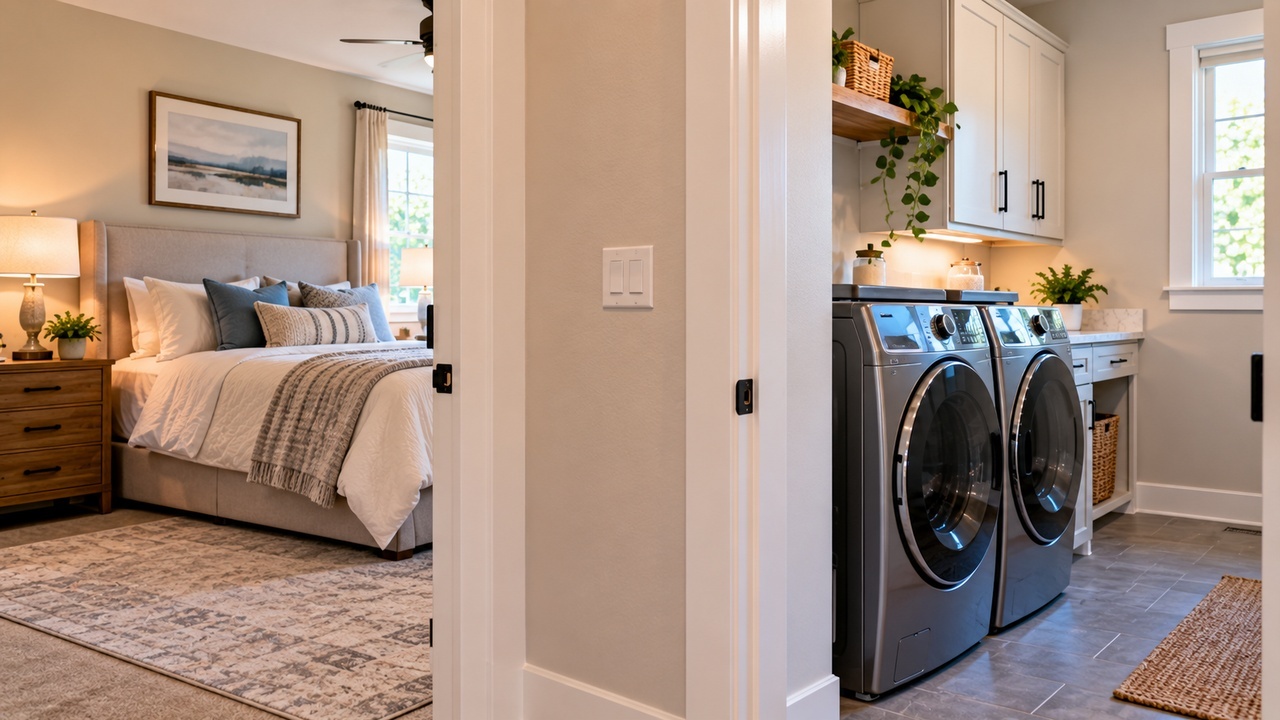
A bedroom positioned beside a laundry room may mean hearing a washer during an early morning or late-night load. A wall shared with a living room may be exactly where a television or entertainment system naturally belongs.
None of these arrangements automatically makes the layout undesirable. They are simply worth noticing.
Think Beyond Today’s Furniture
During a showing, furniture placement can disguise how rooms relate to each other. Walk around both sides of shared walls and imagine how you would actually use each space.
Where would your television go? Where is the headboard likely to sit in the adjoining bedroom? Is a bathroom vanity, shower, or toilet located directly behind that wall?
Your furniture may be arranged very differently from the seller’s.
Listen for Mechanical Spaces
Laundry rooms, garages, bathrooms, and kitchens contain equipment and plumbing that quieter rooms do not.
Notice whether mechanical equipment, appliances, plumbing walls, or frequently used doors are positioned beside spaces where you expect quiet.
This can be particularly relevant if someone works from home, sleeps during the day, has young children, or is sensitive to household noise.
Use the Floor Plan Differently
If a floor plan is available, stop looking only at individual rooms and start examining their relationships.
Trace the walls around the rooms that matter most to you and identify what sits directly beside them.
A home can have the right number of bedrooms, bathrooms, and square feet and still function differently than you expected because of how those spaces interact.
You cannot understand every sound a home will make during a short showing. But checking what is located on the opposite side of important walls can help you picture daily life more accurately before deciding whether the layout truly works for you.