 A house can look beautiful on a sunny afternoon, but the way it handles a heavy rainstorm may reveal important details about its condition. Before buying, it is worth looking beyond the roof itself and examining where water travels after it reaches the gutters. Poor drainage can affect landscaping, walkways, crawl spaces, and even the foundation over time.
Where Downspouts Release Water
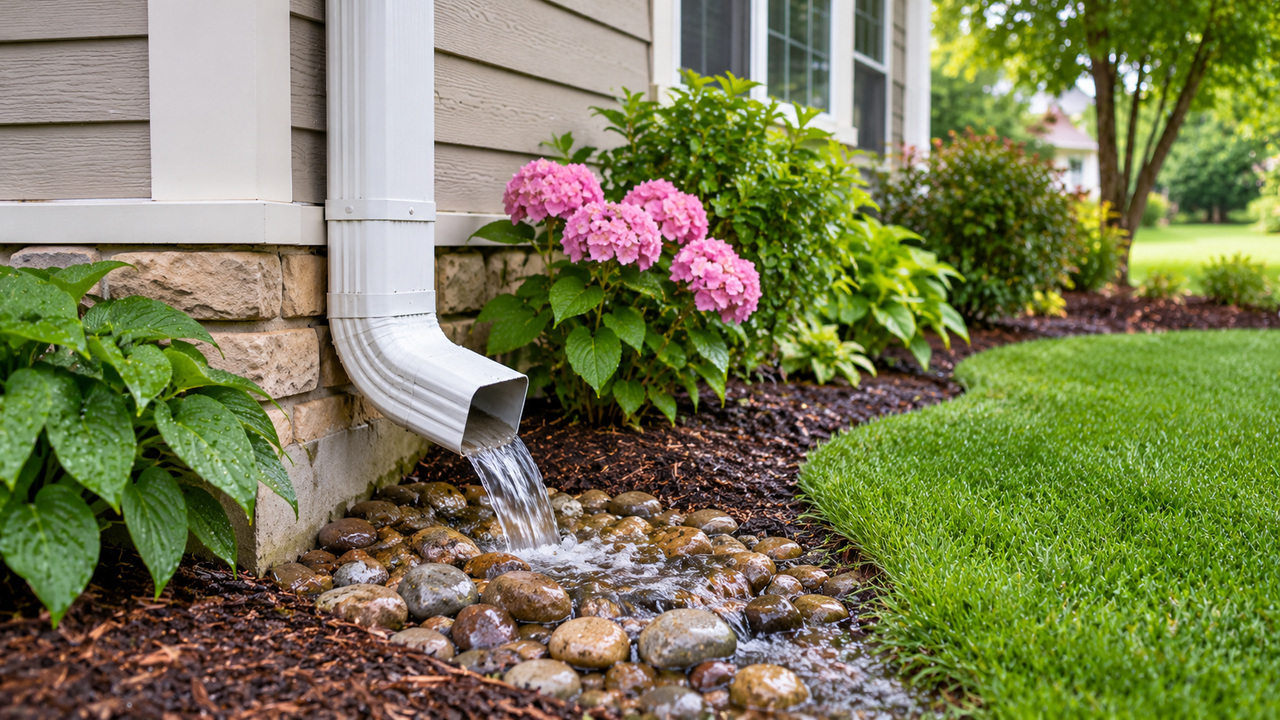
Walk around the exterior and locate every downspout. Notice whether it empties directly beside the foundation, onto a walkway, or into a drainage extension that carries water farther away. Water collecting near the base of the house may increase moisture exposure, especially when the ground slopes toward the building.
Downspout extensions are not automatically proof that a problem exists. They may be a sensible preventive measure. What matters is whether the overall system appears to direct runoff away from vulnerable areas.
Look at the Ground, Not Just the Gutters
Check the soil around the house for erosion, washed-out mulch, and low spots. These conditions can suggest that runoff repeatedly follows the same path. Standing water, persistent dampness, or staining near exterior walls may deserve closer attention.
Also consider hard surfaces. A driveway or patio that slopes toward the house can send water in an unexpected direction. Landscaping improvements can change drainage patterns, so recent yard work is worth discussing with the seller.
Ask What Happens During a Storm
A showing on a dry day offers only a snapshot. Ask whether the seller has noticed pooling, overflowing gutters, water entering the garage, or dampness in a basement or crawl space during heavy rain. Review available disclosures and maintenance records for prior drainage repairs.
If possible, visit the property after rainfall. You may see water paths that would be difficult to identify otherwise. Never enter flooded or unsafe areas to investigate.
Know When to Bring in a Professional
A general home inspection can identify visible drainage concerns, but certain issues may warrant a drainage contractor, foundation specialist, or other qualified professional. The right expert depends on the symptoms and the property’s construction.
Get estimates before assuming a repair is inexpensive. Some fixes involve straightforward downspout changes, while others require grading, underground drainage, or work near the foundation. Local conditions and permit requirements can affect the options.
A thoughtful buyer does not need a perfect yard or a flawless gutter system. The goal is to understand how the property manages water and whether any concerns fit the buyer’s maintenance budget. Taking a few minutes to trace the path of rainwater can reveal practical questions worth answering before making a commitment.